The classic Golden Triangle shows you India's imperial past. Adding Haridwar
and Rishikesh shows you its living faith. This 8-day private tour starts in Delhi, takes in the Taj
Mahal at Agra and the forts and bazaars of Jaipur, then heads north to the foothills of the
Himalayas, where the Ganges leaves the mountains and enters the plains
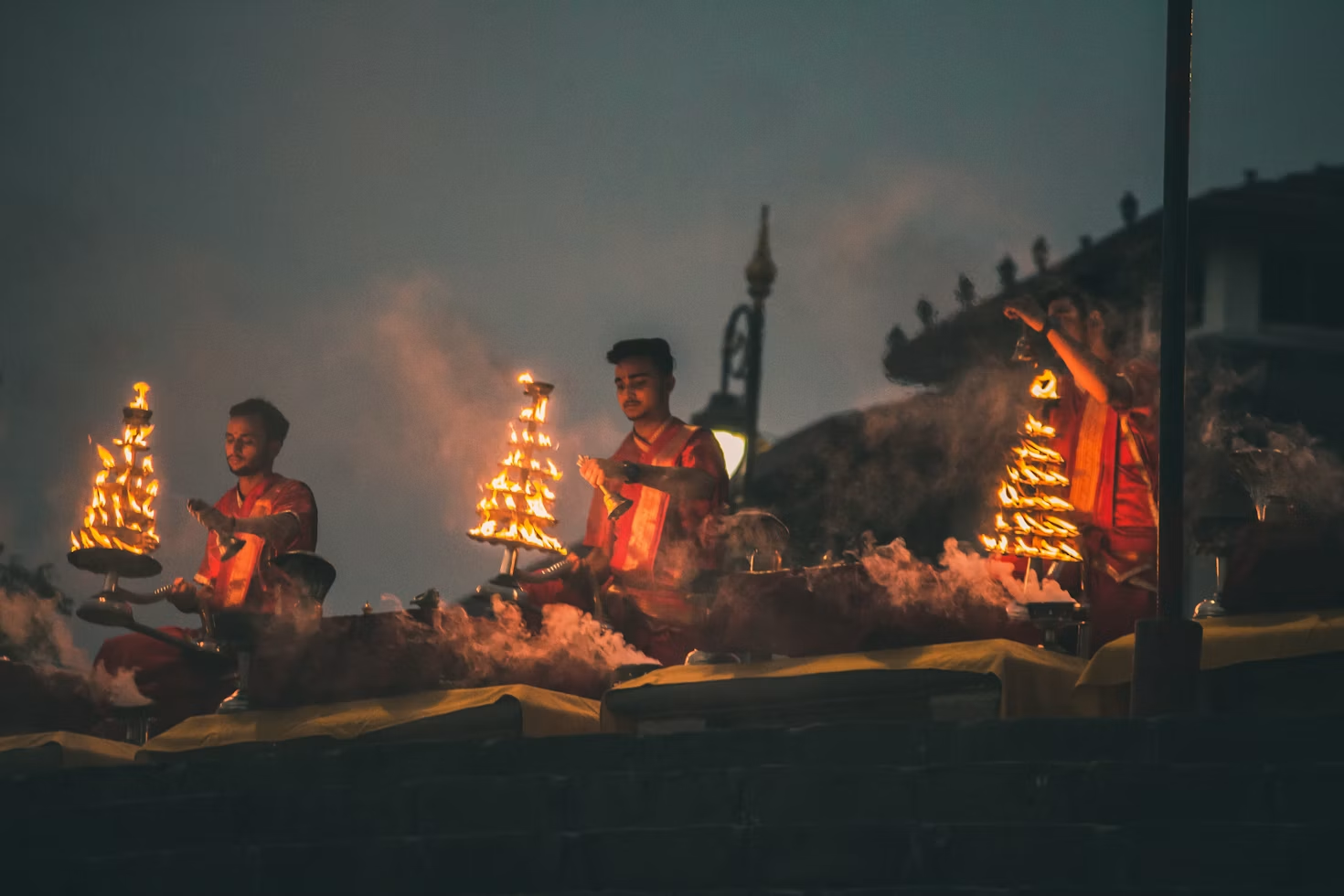
At Haridwar you join thousands of pilgrims at Har Ki Pauri for the evening
Ganga Aarti, when oil lamps are floated on the river and bells ring across the ghats. At Rishikesh,
25 km upstream, the mood changes: quieter, greener, full of ashrams, yoga schools and suspension
bridges over fast green water. You can raft the rapids, sit through a riverside aarti at Parmarth
Niketan, or simply watch the river from a café terrace.
You travel throughout in a private air-conditioned car with your own driver,
with licensed guides in Delhi, Agra and Jaipur. The route covers roughly 1,300 km, spread so that no
single day involves more than six hours of driving
Trip highlights
See the Taj Mahal at sunset and again at sunrise
Visit UNESCO World Heritage Sites in all three Golden Triangle cities
Ride a cycle rickshaw through the lanes of Chandni Chowk in Old Delhi
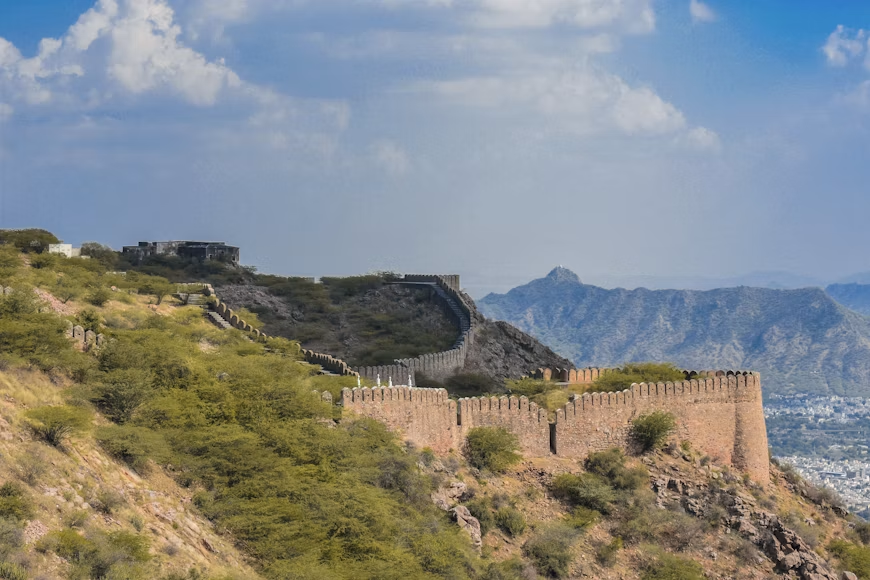
Walk up to Amber Fort and its mirrored Sheesh Mahal above Maota Lake
Stop at Fatehpur Sikri and the Chand Baori stepwell on the Agra–Jaipur road
Attend the evening Ganga Aarti at Har Ki Pauri in Haridwar
Take the cable car up to the hilltop Mansa Devi temple
Cross the Ganges on Rishikesh's suspension bridges and visit the old Beatles Ashram
Try white-water rafting on the Ganges, in season
Join a morning yoga or meditation session by the river
Day by day
Your 8-Day Itinerary
Jump to any day, or scroll through the full route below.
1
Day 1:
Arrive in Delhi
Your driver meets you at the airport and takes you to your hotel. Once you've rested,
your guide takes you out for an afternoon in New Delhi: the Persian-style gardens of
Humayun's Tomb, the carved sandstone shaft of Qutub Minar, and a drive past India Gate
and the buildings of Lutyens' capital.
Overnight in Delhi.
02
Day 2:
Old Delhi, then on to Agra
The morning belongs to Old Delhi. You see the Red Fort from outside, visit Jama Masjid,
and take a cycle rickshaw through Chandni Chowk, past shops of spices, sweets and
silver. You stop at Raj Ghat, Gandhi's memorial.
In the early afternoon you drive to Agra on the Yamuna Expressway, about three and a half
hours. After check-in, you visit the Taj Mahal with your Agra guide, then watch the
light fade over the marble from Mehtab Bagh, the garden across the river.
Overnight in Agra.
3
Day 3:
Sunrise at the Taj, Fatehpur Sikri and Jaipur
You return to the Taj Mahal at opening time, when the crowds are thin and the marble
glows pink. After breakfast you tour Agra Fort, where Shah Jahan spent his final years.
The drive to Jaipur includes Fatehpur Sikri, Akbar's abandoned capital with its towering
Buland Darwaza, and Chand Baori at Abhaneri, a 9th-century stepwell of extraordinary
geometry. You reach Jaipur in the evening.
Overnight in Jaipur.
04
Day 4:
Jaipur's Forts and Palaces
You start early at Amber Fort, then stop at Jal Mahal, apparently floating on Man Sagar
Lake. In the walled city you tour the City Palace, still partly a royal residence, and
Jantar Mantar, an observatory of giant stone instruments, and photograph the pink
latticework of Hawa Mahal. The evening is free for Johari Bazaar or a Rajasthani dinner.
Overnight in Jaipur.
5
Day 5:
Jaipur back to Delhi
After a relaxed morning, you drive back to Delhi, about five to six hours. You'll arrive
with time to rest, shop in Connaught Place or visit Akshardham or the Lotus Temple if
you're still keen.
Overnight in Delhi.
06
Day 6:
Delhi to Haridwar and the Ganga Aarti
You leave after breakfast for Haridwar, roughly five to six hours by road, or by morning
train if you'd prefer. Haridwar is one of Hinduism's seven sacred cities, and the Ganges
reaches the plains here.
In the afternoon you take the cable car to Mansa Devi, the hilltop temple above the town,
with views over the river and the ghats. As evening falls, you find a place at Har Ki
Pauri for the Ganga Aarti, when priests swing tiered lamps over the water and pilgrims
set small leaf boats of flowers and flame adrift on the current. It's crowded, loud and
genuinely moving.
Overnight in Haridwar.
7
Day 7:
Rishikesh, Yoga and the River
A short drive upstream brings you to Rishikesh, where the Ganges runs clear and fast
between forested hills. You visit Triveni Ghat, cross the river on the Ram Jhula
suspension bridge, and explore the temples, ashrams and bookshops around Swarg Ashram.
At the Maharishi Mahesh Yogi Ashram, now known as the Beatles Ashram, graffiti-covered
meditation huts sit in the forest where the band stayed in 1968.
Your afternoon is flexible: white-water rafting when the river is open, a yoga or
meditation class, an Ayurvedic massage, or a walk to a waterfall. At dusk, you attend
the riverside aarti at Parmarth Niketan, quieter and more contemplative than Haridwar's.
Overnight in Rishikesh.
08
Day 8:
Morning by the River, then Return to Delhi
You have a slow start: sunrise over the Ganges, a morning yoga session, or breakfast on a
terrace above the water. After check-out you drive back to Delhi, around six hours, and
your driver drops you at the airport, railway station or hotel.
Included
7 nights' accommodation with daily breakfast
Private air-conditioned vehicle with a professional driver for all eight days
Fuel, tolls, parking, interstate taxes and driver allowance
All airport, hotel and station transfers
Licensed English-speaking guides in Delhi, Agra and Jaipur
Local assistance in Haridwar and Rishikesh
Cycle rickshaw ride in Chandni Chowk
Bottled water in the vehicle
All applicable taxes and 24/7 support
Not Included
Flights and visa fees
Monument entry tickets (can be added on request)
Mansa Devi cable car tickets
Rafting, yoga classes, spa treatments and other activities
The three main cities are about empires and architecture. Haridwar and Rishikesh are about
the river, ritual and daily devotion, and the Himalayan foothills are a scenic change from
the plains.
About 220 km, or five to six hours by road. Trains take around four and a half hours, and we
can book those instead if you'd rather not drive.
About 25 km, roughly 45 minutes, so they're easy to combine.
The rafting season usually runs from late September to June. Operations are suspended during
the monsoon for safety, so if you're travelling in July, August or early September, plan on
other activities.
It takes place at sunset, so the time shifts through the year. Arrive 45 minutes early for a
decent spot, especially on weekends and festival days.
Yes, modest clothing that covers shoulders and knees for temples and ghats. You'll remove
your shoes at temples and before stepping onto the ghats.
Both towns are holy sites, so alcohol and meat are generally not available, and consuming
them there isn't appropriate.
The Kanwar Yatra, usually in July or August, brings enormous crowds of pilgrims to Haridwar
and heavy traffic on the roads. October to March is the easiest stretch, though mornings in
Rishikesh get cold in December and January.
Yes. Dropping a night in Jaipur brings it to seven days. Adding nights lets you include
Mussoorie, Dehradun, Corbett National Park or a Himalayan yoga retreat.
Mostly yes, though the Haridwar ghats get crowded and some temple approaches involve steps.
Tell us about mobility needs and we'll adjust the plan.